What Is A True Prophet?
Do they speak in agree ment with the Scriptures? (Isaiah 8:20)
All prophecies fulfilled-- 100% (Deut.18:22)
Does not lead followers to worship of any other than the one True and Living God. (Deut. 13:1-3)
Has fruits of holiness-- Meekness, blameless, faithful, self denying, honest.(2Peter 1:21, Numbers 12:3, Daniel 6:4)
Bears the fruit of the Spirit: Love, joy ,peace, longsuffering gentleness, goodness, faith, self-contol. (Galatian 5:22)
Faithful to reprove sin, dispite consequencess-- not regarding position or class. (I Kings 22:8)
Speaks to, rebuke, comfort, instruct and encourge. (2 Timothy 3:16)
Spoken to by God through visions or dreams. (Numbers 12:6)
Does not aspire to the attainment of the status of a Prophet, but is choosen by God. (2 Peter 1:21)
While in vision will become very weak then stregnthened. (Daniel 10:18)
While in vision, eyes are open and does not breathe. (Numbers 24:4)
Does not go into vision at will, but only when God chooses. (2 Peter 1:21)
Often unpopular (Luke 6:26, I Kings 22:8, Isa. 30:9,10)
How do you know if the person you are listening to is a true prophet? Does it make a difference whether the person is a true prophet or not? Are there any real prophets in our days? Has the ability to be a true prophet been reserved for only people in Bible times? The Bible gives us much information on how to tell what is a true prophet and how to tell if a prophet is false.
One of the first texts that we should look at is this: ‘To the law and to the testimony: if they speak not according to this word, it is because there is no light in them.’ Isaiah 8:20. Notice here that it doesn’t say that there is some light in them. It says that there is no light in them. Their doctrine should be in harmony with the Bible. Also, in Deuteronomy 18:22 we read, ‘When a prophet speaketh in the name of the LORD, if the thing follow not, nor come to pass, that is the thing which the LORD hath not spoken, but the prophet hath spoken it presumptuously: thou shalt not be afraid of him.’ So, what that person prophecies should come to pass. He has to be correct about what he says will happen in the future. If he is wrong about a future event then he is not a true prophet. We read also in Deuteronomy 13:1-3: ‘If there arise among you a prophet, or a dreamer of dreams, and giveth thee a sign or a wonder, And the sign or the wonder come to pass, whereof he spake unto thee, saying, Let us go after other gods, which thou hast not known, and let us serve them; Thou shalt not hearken unto the words of that prophet, or that dreamer of dreams: for the LORD your God proveth you, to know whether ye love the LORD your God with all your heart and with all your soul.’
So the Bible (the law and testimony) is our guide for judging who is a true prophet. A real prophet will say things that will come to pass and he will lead you to worship the true God.
What kind of person is a true prophet? In 2 Peter 1:21 we read that they are holy men. ‘For the prophecy came not in old time by the will of man: but holy men of God spake as they were moved by the Holy Ghost.’ We can get an idea what this means by looking at people that were prophets in the Bible. Moses was a prophet and was given visions. What does Gods word say about the kind of person he was? We can find the answer in Numbers 12:3: ‘(Now the man Moses was very meek, above all the men which were upon the face of the earth.)’ Daniel was a prophet and was given visions from God. And this is what the Bible records of the kind of person he was: ‘Then the presidents and princes sought to find occasion against Daniel concerning the kingdom; but they could find none occasion nor fault; forasmuch as he was faithful, neither was there any error or fault found in him.’ Daniel 6:4. So meekness and faithfulness toward God are two qualities we can see in people that have been prophets of God. Gods prophets are godly and like Christ. The Bible tells us that John the Baptist was a prophet of God. What does it say of him? Christ said of him, ‘What went ye out into the wilderness to see? A reed shaken with the wind? But what went ye out for to see? A man clothed in soft raiment? behold, they that wear soft clothing are in kings' houses. But what went ye out for to see? A prophet? yea, I say unto you, and more than a prophet. For this is he, of whom it is written, Behold, I send my messenger before thy face, which shall prepare thy way before thee.’ Matthew 11:7-10. We see here that a prophet will not live richly and wear fine cloths and will not be easily shaken by the winds of doctrine or circumstances. In 1 Kings chapter 13 we read about two prophets. One was a true prophet and the other was a false prophet. In verse 18 we are told what the false prophet did, ‘He said unto him, I am a prophet also as thou art; and an angel spake unto me by the word of the LORD, saying, Bring him back with thee into thine house, that he may eat bread and drink water. But he lied unto him.’ The false prophet lied. So a true prophet will be honest. In this story there is a lesson to those that feel that the Lord has led them. They should not listen to someone claiming to be a prophet of God when that person is saying something contrary to what the Lord has told them. They should follow the Lord.
Will a true prophet say things that are pleasing and that only make us feel good? In 1 Kings 22 we find that Micaiah was a true prophet of God but the king didn’t like him. Why? Because his words made the king uncomfortable. ‘And the king of Israel said unto Jehoshaphat, There is yet one man, Micaiah the son of Imlah, by whom we may inquire of the LORD: but I hate him; for he doth not prophesy good concerning me, but evil. And Jehoshaphat said, Let not the king say so.’ 1 Kings 22:8 A prophet will not always speak what some want to hear. In Isaiah we read, ‘That this is a rebellious people, lying children, children that will not hear the law of the LORD: Which say to the seers, See not; and to the prophets, Prophesy not unto us right things, speak unto us smooth things, prophesy deceits:’ Isaiah 30:9&10. A true prophet convicts us of sin.
What is the purpose of prophecy and visions? In 1 Corinthians 14:3&4 we read, ‘But he that prophesieth speaketh unto men to edification, and exhortation, and comfort. He that speaketh in an unknown tongue edifieth himself; but he that prophesieth edifieth the church.’ We find in 1 Samuel 3 that the child was given a vision. In that vision God revealed to Samuel what the future would be for Eli and his disobedient sons. See also Acts 9:1-18 & 16:9.
How does a prophet receive information? The Bible says, ‘And he said, Hear now my words: If there be a prophet among you, I the LORD will make myself known unto him in a vision, and will speak unto him in a dream.’ Numbers 12:6. What is a vision? How can someone know if a prophet has seen a real vision? Is a vision just some imagings in the head, something the person just thought up? Or is it different? What examples of visions do we have in the Bible? Let’s look at the Bible and see.
First, we find that the vision can change the persons total understanding about where they are. We see this in Ezekiel and Daniel in the following texts: Ezekiel 8:3 And he put forth the form of an hand, and took me by a lock of mine head; and the spirit lifted me up between the earth and the heaven, and brought me in the visions of God to Jerusalem, to the door of the inner gate that looketh toward the north; where was the seat of the image of jealousy, which provoketh to jealousy. Ezekiel 11:24 Afterwards the spirit took me up, and brought me in a vision by the Spirit of God into Chaldea, to them of the captivity. So the vision that I had seen went up from me. Ezekiel 40:2 In the visions of God brought he me into the land of Israel, and set me upon a very high mountain, by which was as the frame of a city on the south. Daniel 8:2 And I saw in a vision; and it came to pass, when I saw, that I was at Shushan in the palace, which is in the province of Elam; and I saw in a vision, and I was by the river of Ulai.
Paul wrote of someone who had a vision in this way, ‘It is not expedient for me doubtless to glory. I will come to visions and revelations of the Lord. I knew a man in Christ above fourteen years ago, (whether in the body, I cannot tell; or whether out of the body, I cannot tell: God knoweth;) such an one caught up to the third heaven.’ 2 Corinthians 12:1&2
Second, we see that the person becomes weak and appears to go into a trance. In Numbers
24:4 we read, ‘He hath said, which heard the words of God, which saw the vision of the Almighty, falling into a trance, but having his eyes open:’ Notice that the eyes are open while in vision. Daniel described his experience this way:
‘Therefore I was left alone, and saw this great vision, and there remained no strength in me: for my comeliness was turned in me into corruption, and I retained no strength.’ Daniel 10:8
So a vision is different than just our imagination. In Jeremiah 13:10 we read about the imagination: ‘This evil people, which refuse to hear my words, which walk in the imagination of their heart, and walk after other gods, to serve them, and to worship them, shall even be as this girdle, which is good for nothing.’
We find in 2 Peter 1:21 that is quoted above that prophecy does not come by the will of man. It is not something that the person controls but God gives them a vision when He chooses.
Are miracles proof of a true prophet? The Bible says: ‘For false Christs and false prophets shall rise, and shall show signs and wonders, to seduce, if it were possible, even the elect. Mark 13:22. See also Matthew 24:24.
Also in Jeremiah 23:16 we read, ‘Thus saith the LORD of hosts, Hearken not unto the words of the prophets that prophesy unto you: they make you vain: they speak a vision of their own heart, and not out of the mouth of the LORD.’
What difference does it make? Can a prophet be generally Christian and be a true prophet? The Bible says: ‘Beware of false prophets, which come to you in sheep's clothing, but inwardly they are ravening wolves.’ Matthew 7:15. Now this doesn’t mean that they will wear a fleece rug on their back, it means that they will look like a Christian. They will appear to be a follower of Christ, the Lamb of God.
Will there be prophets in modern times? John said: Beloved, believe not every spirit, but try the spirits whether they are of God: because many false prophets are gone out into the world. 1 John 4:1. Notice that he didn’t say to avoid everyone who claimed to be a prophet or prophesied. If there were to be no true prophets he could have said, ‘Don’t believe anyone.’ But he said to test them.
How shall we know them? ‘Wherefore by their fruits ye shall know them.’ Matthew 7:20. Will everyone speak well of a true prophet? Will they be popular? ‘Woe unto you, when all men shall speak well of you! for so did their fathers to the false prophets.’ Luke 6:26
‘Wherefore, behold, I send unto you prophets, and wise men, and scribes: and some of them ye shall kill and crucify; and some of them shall ye scourge in your synagogues, and persecute them from city to city:’ Matthew 23:34.
A true prophet is not made by popular vote or by the miracles they perform. There is no record of a miracle being preformed by John the Baptist but he was a true prophet. He was hated by Herodias because he pointed out her sin. A prophet is not a false prophet because someone tells lies about them. By their fruits ye shall know them, not by the gossip you hear. Test for yourself those that lead you and see if they are in agreement with the Bible.
What are these ‘fruits’? The Bible says: ‘But the fruit of the Spirit is love, joy, peace, longsuffering, gentleness, goodness, faith, meekness, temperance: against such there is no law.’ Galatians 5:22&23. Does your leader demonstrate these fruits? I hope so. If not pray that the Lord will help you.
Tell me, if a true modern day prophet were to write down what they saw in vision would that be adding to the Bible? No, but being a true prophet what they wrote would be in harmony with the Bible. The writers of the New Testament were not adding to the books of Moses but what they wrote were in agreement with what Moses wrote. If they were a false prophet you would find disagreement with what they wrote and what the Bible says and you would find yourself having to choose either the writings of that prophet or the Bible.
|
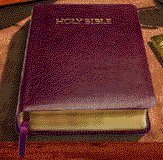
"To the law and the testimony: if they speak not according to this word, it is because there is no light in them." (Isa. 8:20)
"For such are false apostles, deceitful workers, transforming themselves into the apostles of Christ. And no marvel; for Satan himself is transformed into an angel of light." (2 Cor. 11:13,14)
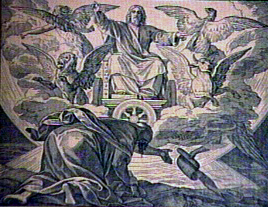
"Therefore I was left alone, and saw
this great vision, and there remained no strength in me: for my comeliness was turned in
me into corruption, and I retained no strength." ---Daniel 10:8
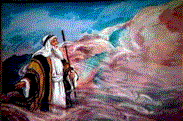
"Now the man Moses was very meek, above all the men which were upon the face of the earth." ---Numbers 12:3
Biblical tests of a False Prophet:
I Kings 13
Deuteronomy 13:1-3
Deuteronomy 18:22
Isaiah 8:20
Jeremiah 23
Matthew 7:15-20
Luke 6:26
2 Peter 2:1-3
I John 4:1